







.jpg)



Magura is one of the largest caves in Bulgaria, covering an area of 28,600 m². For many years, it has remained one of the country’s most fascinating tourist destinations, attracting thousands of visitors every year.
The cave was inhabited in different historical periods, each of which left its mark. Visitors can see prehistoric rock paintings, fragments of clay vessels and Old Slavic inscriptions. Today, the cave is used not only as a tourist attraction but also as a cellar for storing Magura wine and sparkling wine.
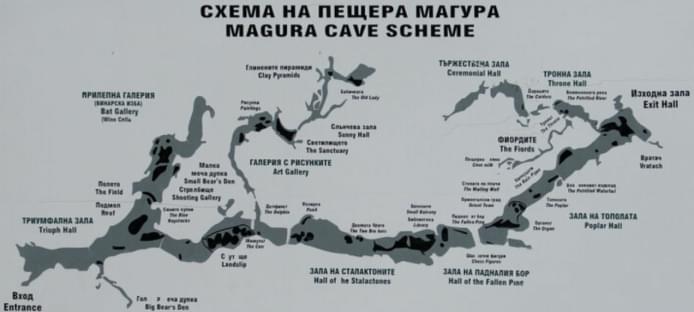
The cave lies inside a limestone hill at an elevation of 461 m above sea level. During the tour, visitors descend as much as 56 m. Inside, there are four galleries and six chambers, with ceilings reaching up to 27 m in height.
Opening hours
| Period | Days open | Opening hours |
|---|---|---|
| April–October | Daily | 10–17 |
| November–March | Daily | 10–16 |
| Visitor category | Price |
|---|---|
| Adults | 5 leva |
| Pensioners/students | 3 leva |
Description of the chambers
Magura Cave has several chambers. The largest is the first one, known as the Triumphal Hall. It is 128 m long and 58 m wide, with a ceiling height of up to 28 m — roughly the height of a nine-storey building.
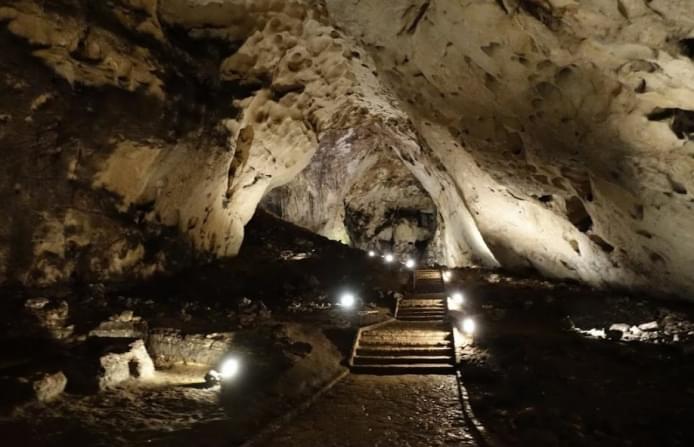
In its southern section, a large alluvial cone has formed, with stone steps leading down to the base of the chamber. Among the cave formations here, the most notable are the Blue Domes stalagmites in the north-western part of the hall.
Archaeologists discovered the foundations of dwellings, tools such as knives and scrapers, ornaments and ovens, as well as pottery. The dwellings were built from wooden stakes driven into the clay floor at intervals of about 25 cm, interwoven with branches and coated with clay. The cave ceiling served as the roof. Remains of hearths and areas used to store ash and charcoal were also found.
Bones of domestic livestock, deer, roe deer, wild goats and cave bears have also been found in the cave.
The former Bat Gallery, covering 2,800 m², is now separated from the Triumphal Hall by an artificial wall and has been converted into the Magura wine cellar. High-quality sparkling wine and red Magura wine are aged here.
The next chamber is called the Ruins. It covers an area of 2,800 m², is 85 m long and up to 68 m wide, with a height of up to 27 m. The floor is strewn with large rock blocks that have fallen from the ceiling and walls.
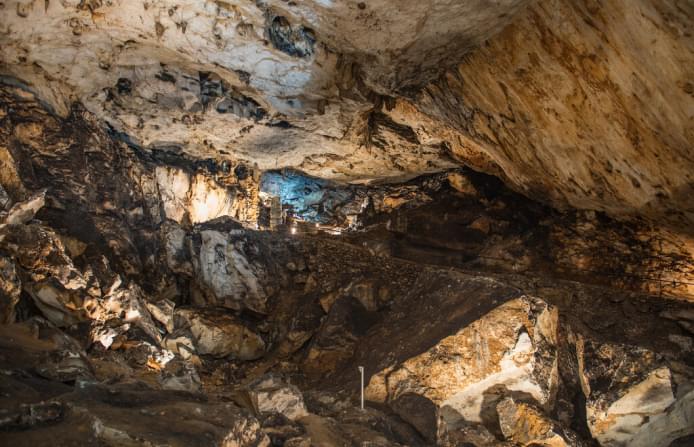
The cross-section of the chamber is asymmetrical, with a flatter south-western side and a steeper north-eastern side. In the southern section, an area known as the Shooting Range slopes downward. In 1943, partisans from the Georgi Benkovski detachment practised shooting here, aiming at the flame of a candle placed on top of a stalagmite.
The western end of the Shooting Range connects to the Drawings Gallery, which initially runs from north-east to south-west before changing direction from south-east to north-west. It eventually opens into three smaller chambers: the Hall of the Sun, the Clay Pots and the Hall of Darkness. This cave passage is 240 m long, covers 3,750 m² and reaches a maximum height of 24 m.
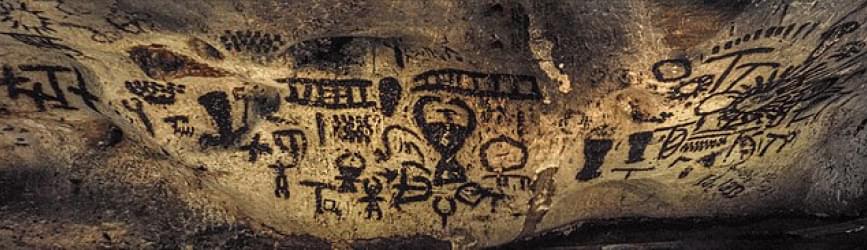
This passage contains Magura Cave’s greatest treasure: its original prehistoric rock paintings, considered among the most remarkable examples of prehistoric art on the Balkan Peninsula.
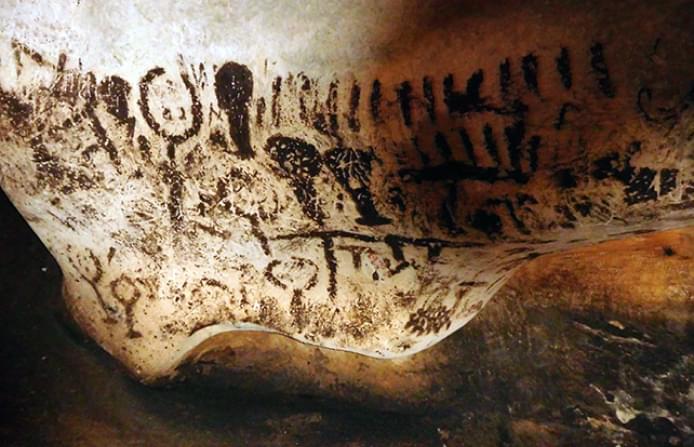
More than 100 drawings made with bat guano can be seen in the Drawings Gallery and the Hall of the Sun. They depict stylised men and women, indistinct animals and various signs, including letter-like symbols, straight lines and zigzags. The best-preserved and most striking images are the dancing and hunting scenes in the so-called Cult Hall. The drawings are believed to date from the Early Bronze Age.
The Magura paintings are a valuable record of the lives of ancient people in this region.
The Stalactite Hall is one of the largest chambers in the cave. It covers 3,640 m², is 92 m long and up to 52 m wide, and reaches a height of 16 m. The limestone layer above it is up to 126 m thick. Its most notable formations are the Big and Small Stalactons. The Big Stalacton is 20 m high and has a circumference of 12 m.
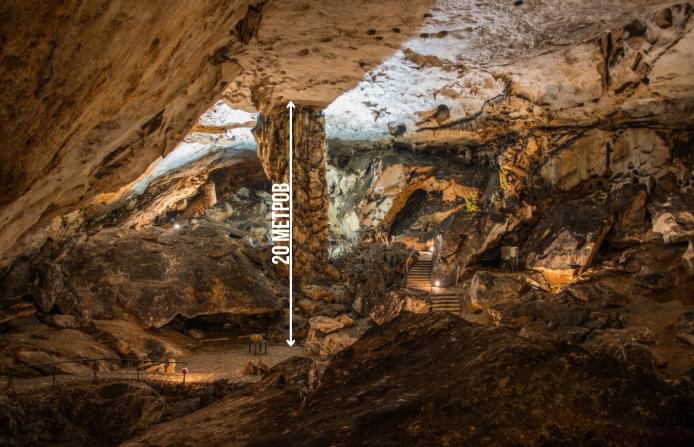
In the eastern section, the hall is “walled off” by a huge rock block measuring 19 × 24 m that collapsed from the wall and ceiling. This suggests that the collapse occurred after the two stalactons had already formed. Another characteristic feature of the hall is a pair of stalagmites known as the Two Brothers. Some of the largest fallen rock blocks in the entire cave lie scattered across the floor here.
The next chamber, 11.4 m long and 6 m in diameter at its base, is called the Fallen Pine, after a fallen stalagmite of the same name.
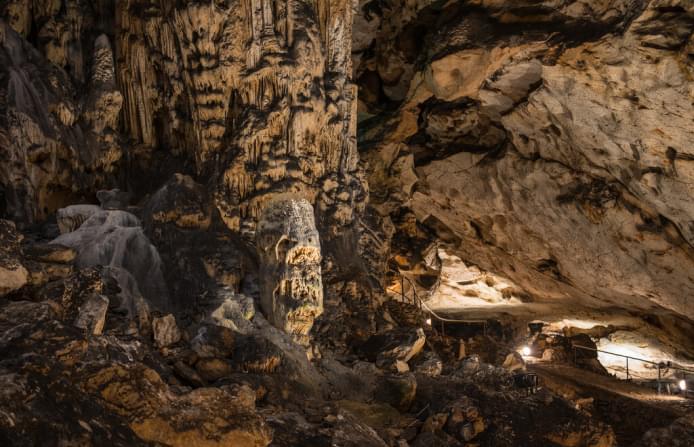
Another notable formation is the Dragon, a stalagmite up to 2.6 m high. The northernmost part of this chamber is the lowest point in Magura Cave, 50 m below the entrance.
Next is the Poplar Hall, 121 m long and up to 35 m wide. Among the large and small rock blocks on the floor stands a slender stalagmite known as the Poplar, more than 6 m high.
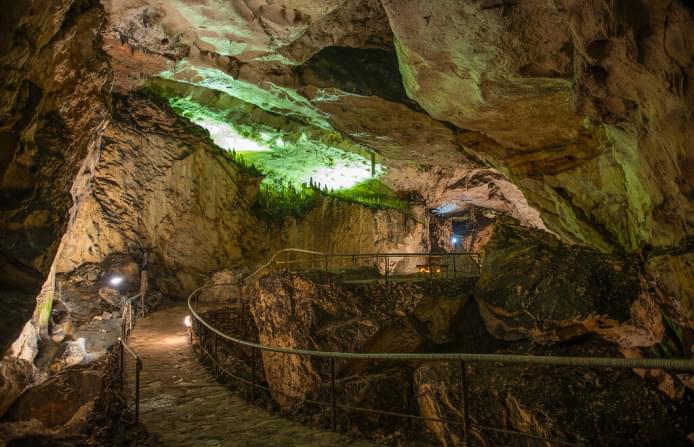
On the southern side of the chamber rises the sheer Wailing Wall. It ends in a broad terrace crowned with small, elegant stalagmites forming a composition known as Baghdad. River pebbles lie along the terrace.
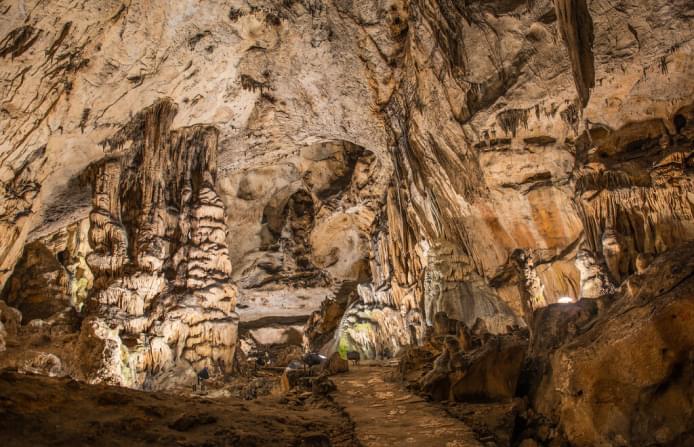
The Throne Hall is richly decorated with cave formations, the most beautiful of which are the Throne, the Medusa and the Petrified Waterfall.
The sanatorium was converted into a temporary hospital for treating people with asthma.
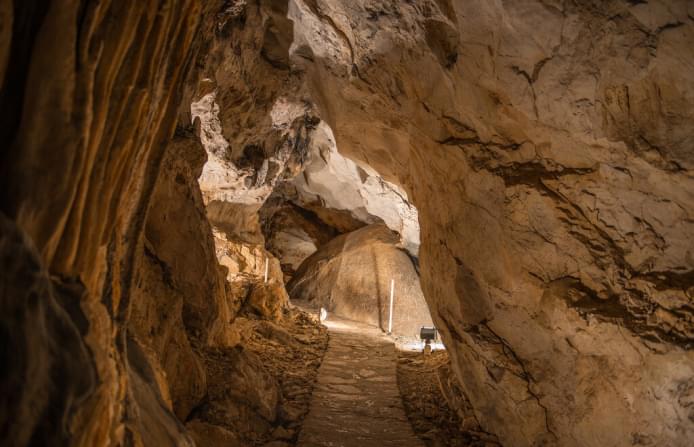
Trials carried out with patients in the summers of 1974 and 1975 produced positive results. The cave’s favourable natural conditions — the absence of allergens, clean air, stable temperature, humidity, sound insulation, ionisation and specialised lighting — create a particularly beneficial environment for people with asthma. Patients reported noticeably easier breathing and an improvement in their overall condition.
This cave is well worth visiting for anyone fascinated by the beauty of the underground world.
What to wear
The temperature inside the cave stays at around 12 °C throughout the year. Even in summer, it is a good idea to bring a warm jacket. Hiking shoes are the best choice for comfortably climbing and descending inside the cave. Gloves and a torch can also come in handy.
How to get there
From Sofia the journey takes just over three hours (190 km). Head north through the village of Gintsi. Continue past Borovitsa without entering the village, veer left and head towards Dolni Lom. Then travel via Ruzhintsi to Dimovo. From there, the cave is less than 15 km to the west.
From Burgas the route is considerably longer — about 575 km. The drive takes around 6.5 hours. Head north-west and turn left before reaching Vetren. Continue west, passing Yambol on your left and Stara Zagora on your right. After passing the outskirts of Plovdiv and Pazardzhik, continue north-west towards Sofia. Drive along the eastern side of Sofia and, on leaving the city, turn left at the roundabout towards the south-west. Take the second right after the roundabout towards Kostinbrod. From there, you join the same road from Sofia to Magura Cave.
What is nearby?
Just a few kilometres away lies Lake Rabisha, the largest inland lake in Bulgaria. It covers 3.25 km² and is 10–15 m deep. It is a pleasant place to enjoy the scenery and swim in fresh water.
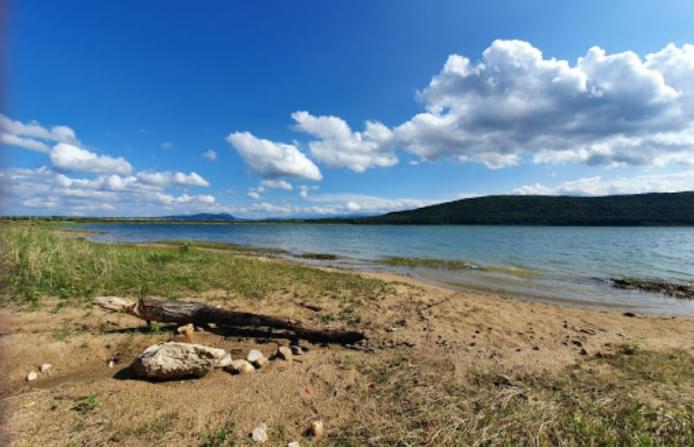
Fishing is also possible. The lake is home to silver carp, grass carp, pike and catfish.
Belogradchik is located 22.5 km from the cave. To get there, return along the same road towards Kladurub, then turn towards the Salashka River. After 7 km, turn left; another 8 km will bring you to Belogradchik.
One of the town’s main attractions is Belogradchik Fortress.
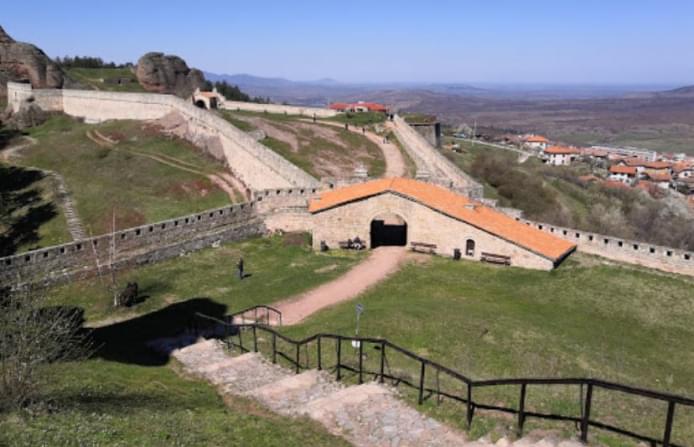
The fortress dates back to the Roman Empire, making it one of the oldest fortifications in Bulgaria. Its architecture is highly distinctive: man-made walls were constructed to the north-west and south-east, while the surrounding Belogradchik Rocks serve as natural defensive walls.
The fortress changed hands repeatedly over the centuries, and its architecture reflects both Ottoman and European influences. Its last involvement in military action came in 1885, during the Serbo-Bulgarian War.
The fortress is divided into three courtyards. Today, the first is largely a hilly open area with beautiful views. In the second courtyard, visitors can see the remains of old structures that once included mills and residences of prominent people. The third courtyard provides access to the rock walls, which offer spectacular views of the surrounding landscape.
The rock formations in this area are exceptionally unusual and striking. Their bizarre shapes are believed to have been formed by the sea that once covered this region. Some formations rise to 200 m and display a remarkable range of colours, from yellow to red.
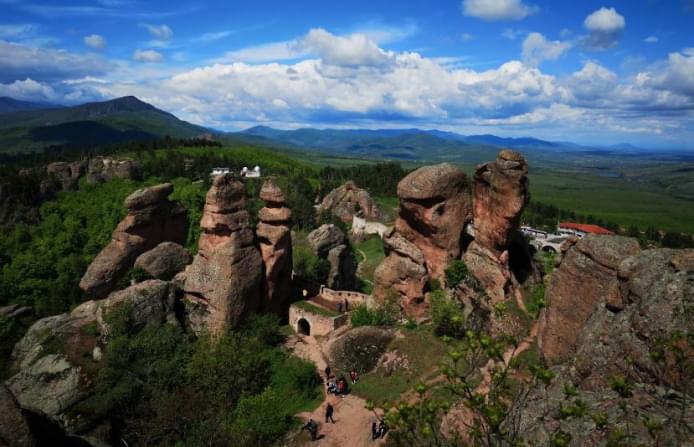
The fortress and rocks have been used as filming locations for In Search of Captain Grant (USSR), Don Quixote Returns (Russia/Bulgaria) and Ashes (Poland).
Magura Cave offers a fascinating glimpse into a hidden underground world. Guides share many interesting facts about the cave itself and about the people whose lives were connected with it in different historical periods. There are also plenty of worthwhile places to explore around Magura, making the area well worth a longer visit.
Questions and answers
What is the Magura Cave?
It is one of the largest caves in Bulgaria, with an area of 28,600 m². Inside there are 4 galleries and 6 halls, with ceilings reaching up to 27 m high.
Where is Magura located and how deep do visitors descend?
The cave sits in a limestone mountain at an altitude of 461 m above sea level. During the tour, visitors descend 56 m.
What are the opening hours and admission prices?
April–October — daily 10:00–17:00; November–March — daily 10:00–16:00. Adults — 5 leva; pensioners and students — 3 leva.
What is the Magura Cave famous for?
Its original rock paintings — more than 100 of them, made with guano and dating back to the early Bronze Age. The former Bat Gallery also houses a wine cellar where the Magura sparkling and red wines are aged.
How should you dress for the visit?
The temperature is around 12 °C year-round, so even in summer an autumn jacket comes in handy. Hiking shoes are best, and gloves and a flashlight will also be useful.
What is there to see near Magura?
Lake Rabisha — the largest inland lake in Bulgaria (3.25 km², 10–15 m deep) — as well as the Belogradchik Fortress and the Belogradchik Rocks about 22.5 km from the cave.

