



.jpg)


Bulgaria has 37 mountain ranges, most of them in the country's south-west and centre. The terrain is defined by five massifs: the Balkan Mountains (Stara Planina), Rila, Pirin, the Rhodopes and Strandzha. The highest peak is Musala in Rila (2,925 m). The mountains hold national parks, UNESCO monasteries, glacial lakes and ski resorts — Borovets, Bansko and Pamporovo.
“Planinata e maika na Bulgaria” — “The mountains are the mother of Bulgaria.” In a country of varied relief, 37 different mountain ranges cover much of the south-west and centre. The striped relief runs from east to west: ranges and lowlands alternate. The western part of the country is more mountainous than the east; towards the Black Sea coast the mountains subside into barely noticeable hills. The Balkan range is the longest; the others are smaller in area and height but also have tall, scenic peaks. Many slopes are forested and home to national parks.
| Massif | Location | Highest point | Height |
|---|---|---|---|
| Balkan Mountains (Stara Planina) | West to east across the whole country | Botev Peak | 2,376 m |
| Rila | Central Bulgaria | Musala Peak | 2,925 m — the country's highest point |
| Pirin | South-western Bulgaria | Vihren Peak | 2,914 m |
| The Rhodopes | Southern Bulgaria | Golyam Perelik | 2,191 m |
What interesting places await travellers in Bulgaria's mountains? What is worth visiting on their slopes and at their foot?
The Balkan Mountains (Stara Planina)
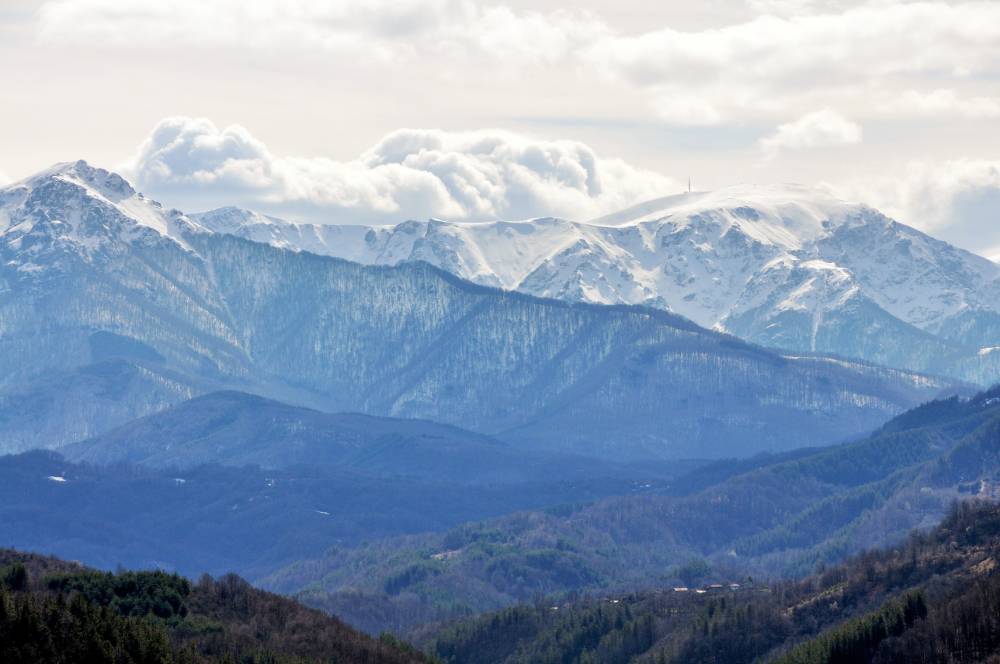
Bulgaria is split into two parts by an old mountain system called Haemus. It begins in the west at the Kom summit near the Serbian border and ends in the east at Cape Emine on the Black Sea coast. The range is 555 km long. Its other name is Stara Planina, or the Old Mountains. This is the country's largest and longest massif (a continuation of the Carpathians), crossed by a long hiking trail.
Stara Planina is a distinctive geoclimatic barrier: it holds back dry northern winds as well as warm, humid air from the southern Balkans. Its summits are rolling and treeless; high up lie green meadows known as poloninas. The Old Mountains have gentle northern slopes and steep southern ones. Around 20 peaks in the central part rise above 2,000 m.
Sredna Gora is a mountain ridge south of the Balkans; its highest peak, Bogdan, rises to 1,604 m. The Tundzha River rises in Stara Planina, along which roses grow on vast plantations. The town of Kazanlak turns them into rose oil famous around the world.
- Mount Botev is named after the celebrated Bulgarian poet Hristo Botev. It is home to a very beautiful waterfall, Rayskoto Praskalo (“Heavenly Shower”), 124.5 m high.
- Shipka — a 1,326 m peak that links the two halves of Bulgaria. An important battle between Russia and Turkey took place here in the late 19th century; a monument on the summit honours the fallen soldiers.
- The Belogradchik Rocks of whimsical shapes stretch for 30 km. They rise dozens of metres into the sky and have their own names: “Adam and Eve,” “The Madonna,” “The Twins,” “The Horseman,” “The Gate.”
- The slopes of the Balkans are occupied by the Balgarka and Central Balkan national parks. In summer visitors ride the bike trails, in winter they ski and snowboard.
- Near Stara Planina tourists stay in guesthouses, chalets and hunting lodges. The mountains are full of karst caves: prehistoric rock paintings have been found in the Magura (Rabisha) Cave.
- Anyone interested in the history and nature of the Balkans should visit Dryanovo Monastery — an ancient church with unique frescoes and legends — and the karst Bacho Kiro Cave.
The Rila Mountains
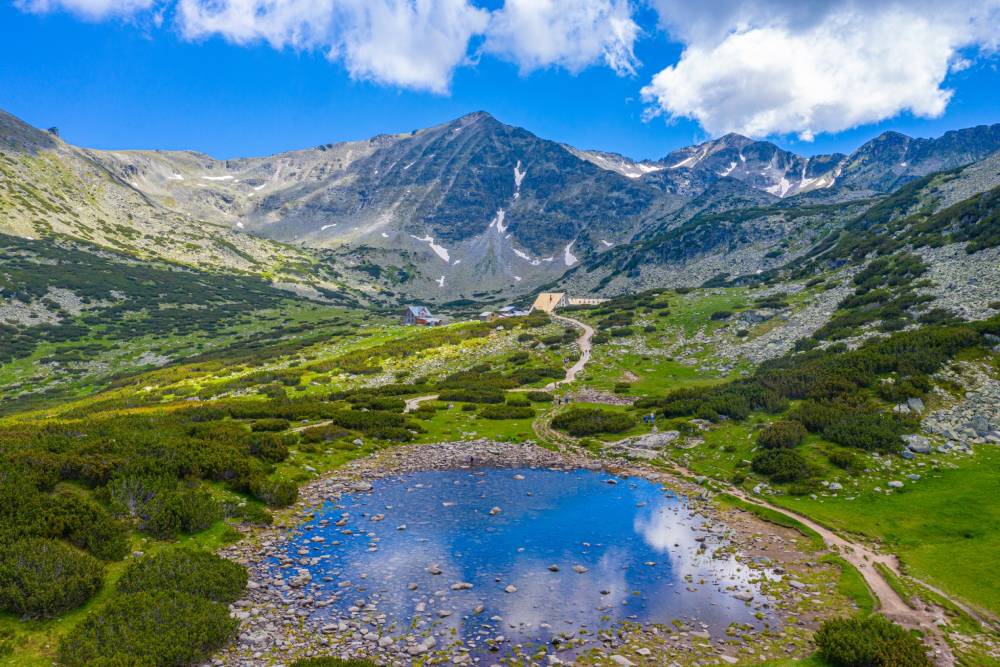
This is a place where you can see the beauty and history of the whole country. Here rise Bulgaria's highest peaks, along with numerous monasteries and lakes. These pyramid-shaped mountains formed long ago and have a varied landscape: cliffs, gorges, alpine meadows and bodies of water. Rila is the “crown” of Bulgaria.
The climate of this mountain region is continental, with a Mediterranean influence. The cloud-wrapped peaks of Rila are breathtaking. The Rila highlands have a special character — a sense of mystery and alluring wildness.
- Mount Musala (80 km from Sofia) translates from Turkish as “only God is higher.” A nature reserve sits on its peak.
- Borovets is a well-known winter-holiday spot at the foot of Musala. In winter people come here to ski, and in summer and autumn climbers set off for Rila's peaks. Bulgarian tsars loved to hunt at this resort.
- The Vitosha massif is visible to the residents of Sofia. They love climbing to the Cherni Vrah summit (2,290 m), for which 50 trails are laid out. Vitosha's slopes hold a national park with spots for hiking and cycling, skiing and caving.
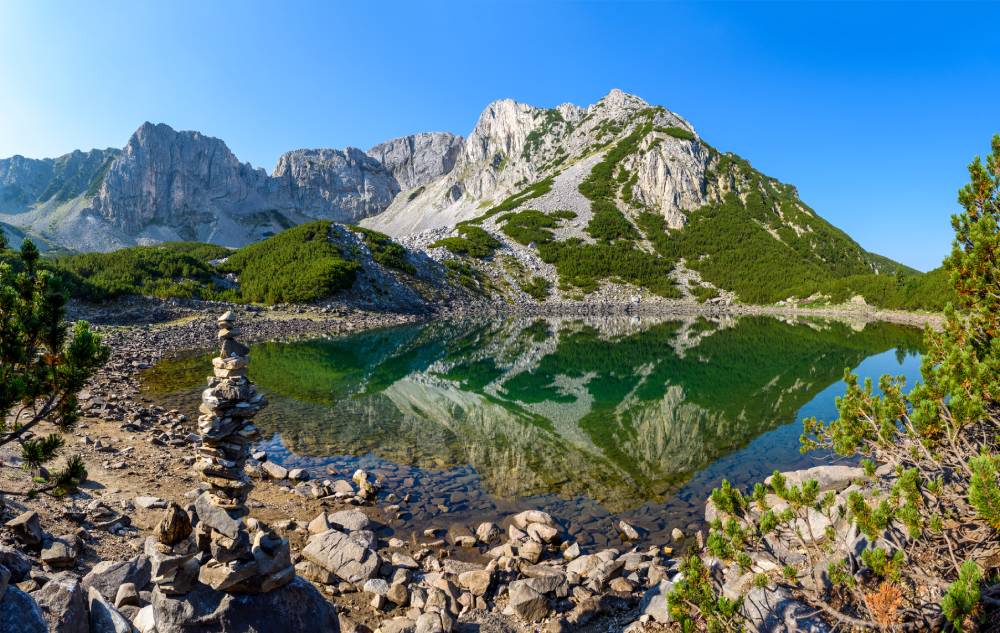
- Tourists love to visit the Seven Rila Lakes with their icy water. The region has more than 180 freshwater bodies; wolves, bears, chamois and roe deer live here.
Rila Monastery stands in the mountains at an altitude of 1,150 m. It was built in the 10th century, and UNESCO has added it to the World Heritage List.

The Pirin Mountains
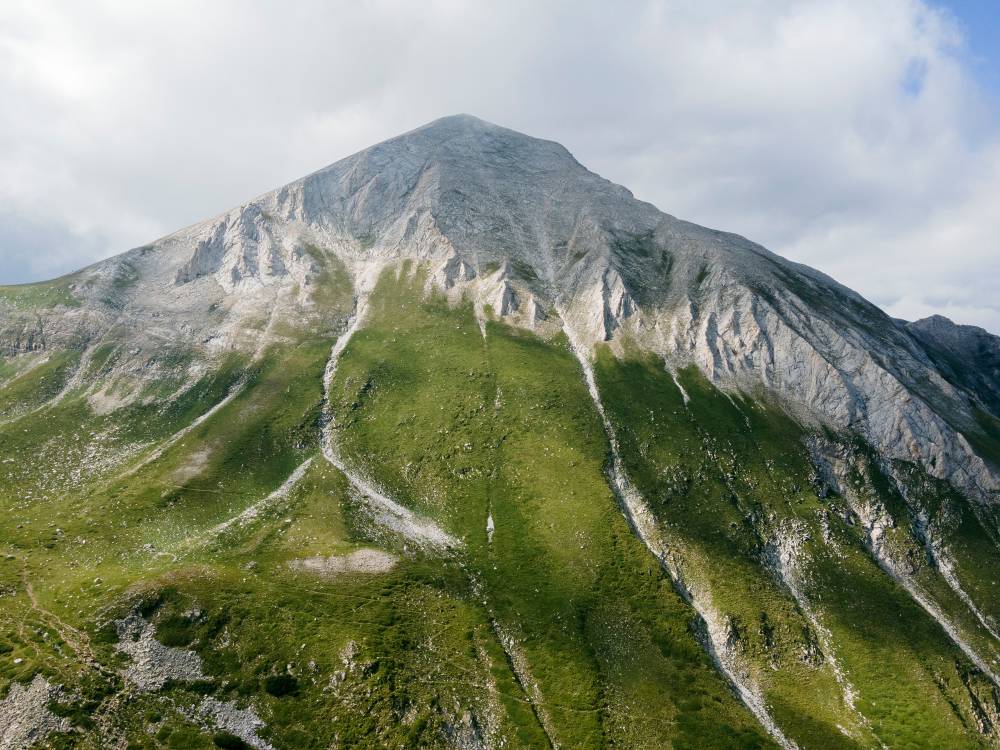
The Pirin range, south of Rila, is considered the most beautiful in Bulgaria. Its name comes from Perun, the ancient god who commanded lightning. The mountains were once called Orbelos — “white as snow.” Pirin stretches 75 km from north-west to south-east; of its 87 peaks, 60 rise above 2,500 m.
Pirin is not as cold as Bulgaria's other mountains — it lies closer to the Mediterranean. You can ski here from December to May, while in summer it is quiet and peaceful thanks to the small number of people.
This range has best preserved its pristine state. On the slopes of Pirin National Park grow dense coniferous forests, and rare edelweiss blooms on the rocks. Even ancient traces of glaciers are visible — deep gorges and valleys. Two ridges draw attention: Mount Dzhano (where, according to legend, the god Perun lived), beside which lie the Popovo and Kremenski lakes, and Dzhengal on the border of Bulgaria, Greece and North Macedonia.
- Gorno Polezhansko Lake is the country's highest lake, at an altitude of 2,710 m.
- Western Pirin is warmer and sunnier than its other slopes. Grapes grow here, famous for their sweet taste; in Melnik you can try superb Bulgarian wines.
- One of the most visited places in the south is the village of Rupite at the foot of the extinct Kozhuh volcano, where the famous seer Vanga lived and gave advice.
- Blagoevgrad hosts music and masquerade festivals: the Diaghilev Festival, the Blagoevgrad Southwest Festival and the Blagoevgrad Blues & Jazz Fest.
- A winter fairy tale awaits in Bansko — a resort town at the foot of Pirin, built in the style of Swiss villages, with many cosy hotels.
One of the UNESCO World Heritage sites is the biosphere reserve in the northern part of Pirin. It holds Bulgaria's largest population of red deer and 116 lakes of glacial origin, some lying above 2,000 m.
The Rhodope Mountains
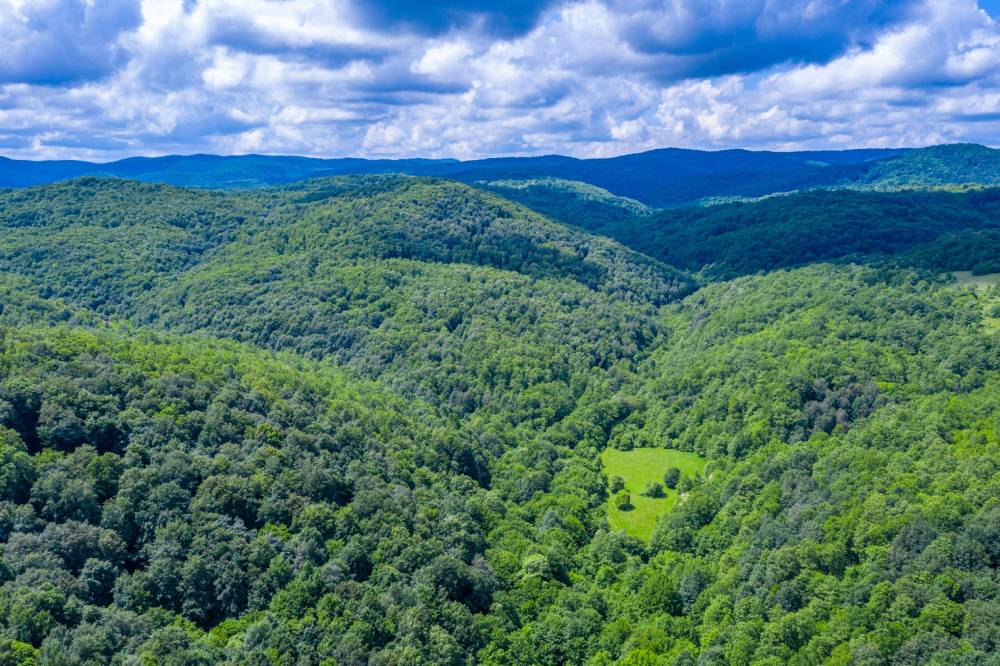
These are grand ridges of a distinctive form. They are marked by rocky outcrops called “vidratsi” — tooth-shaped, cone-shaped or table-like. The Rhodopes are one of the symbols of Bulgaria.
The Rhodopes begin in Greece, but most of them (80%) lie in Bulgaria. They belong to the same belt as the Alps and the Himalayas. The slopes are low and covered with pines; the mountains are rich in karst formations — narrow valleys, large caves and unusual rock figures.
In the Rhodopes it is warm almost all year round, so people come to relax and do sport not only in winter but also in spring. They are ideal for active recreation: walking, cycling and horseback routes. The ski centres of Pamporovo and Chepelare remain as popular as ever.
The Rhodopes have a rich history: Thracians and Romans once lived here. The region is famous for its gorges and patriarchal Bulgarian villages, where folk crafts and throat singing still survive. Orpheus, the hero of ancient legends, hails from these rocks — his native village of Gela is here.
- In the northern Rhodopes, in Plovdiv (on the Maritsa River), stands the famous Alyosha Monument to the Soviet liberator soldier.
- The Devil's Bridge (built in 1518) is Bulgaria's tallest arched bridge, with a single central support, 45 m high.
- Batak Lake is an atmospheric spot for fishing and camping, with clear emerald water; the lake is 20 m deep.
- Bachkovo Monastery, on the bank of the Chaya River, is the second largest in the country (founded in 1083). It has a rich library of ancient books and manuscripts in Old Bulgarian and is renowned for the unique honey from its monastery apiary.
- The “Wonderful Bridges” are large stone arches created by nature.
- The Buynovo Gorge — mysterious caves 16 km long. The border between Byzantium and Bulgaria once ran here; medieval bridges over the Buynovska River survive, with scenic waterfalls.
- The Canyon of Waterfalls — 46 cascades of varying height, a picturesque spot for photography.
- The Devil's Throat and Yagodina are karst caves 8,501 m long, with formations of majestic beauty.
The Strandzha Mountains
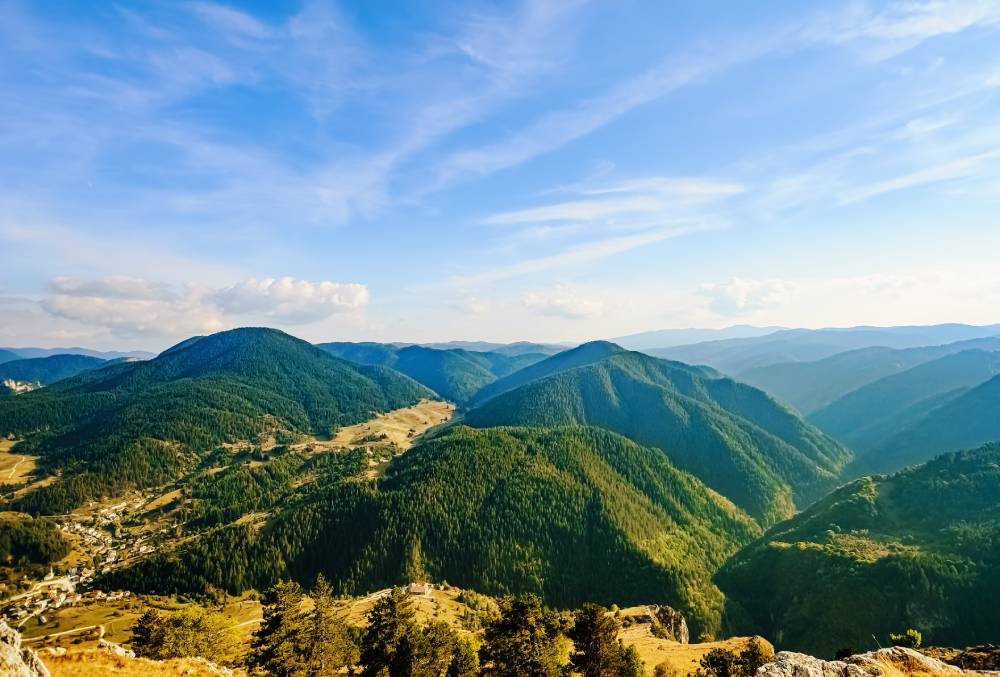
This is one of Bulgaria's largest massifs, covering more than 3,500 sq km. The mountains stretch from south-eastern Bulgaria into European Turkey, almost as far as Istanbul. They are low, with rounded summits. Strandzha's slopes hold many small villages with a distinctive culture, architecture and folklore — this is a place where the people's traditions are preserved.
In Strandzha you can see ancient evidence of Thracian culture and religion, along with other finds from the past. But it is not only an open-air museum: a vast reserve protects a wide range of plants and animals. There are five protected sections, 14 zones with special status and 8 unique natural sites.
- The highest point is Mount Golyama Voda (710 m above sea level).
- Within Strandzha lies the Silkosia reserve, covering 120 sq km, with sheer cliffs up to 60 m. Until the 20th century it was a pirates' hideout; today more than 200 bird species live here.
- Strandzha preserves stretches of virgin relict juniper forest — one of Europe's centres of biodiversity, home to many rare species of plants and animals.
Interesting fact! Nestinarstvo is one of the Bulgarians' ancient customs: a sacred dance on burning embers that the faithful perform barefoot. Combining Christianity and paganism, the ritual is recognised by UNESCO as a priceless heritage of humanity.
Discover the stunning scenic mountains of Bulgaria and feel the true spirit of the Bulgarian people! In summer, forest trails and clean mountain air await you; in winter — skiing and snowboarding on the slopes.
Questions and answers
What is the highest mountain in Bulgaria?
Musala Peak in the Rila Mountains — 2,925 m. It is the highest point not only in Bulgaria but across the entire Balkan Peninsula.
How many mountain ranges are there in Bulgaria?
The country has 37 mountain ranges. The relief is defined by five main massifs: the Balkan Mountains (Stara Planina), Rila, Pirin, the Rhodopes and Strandzha.
Where can you ski in Bulgaria?
The main ski resorts are Borovets and Vitosha (Rila), Bansko (Pirin), and Pamporovo and Chepelare (the Rhodopes). The season in Pirin runs roughly from December to May.
Which of Bulgaria's mountain sites are on the UNESCO list?
Rila Monastery in the Rila Mountains and the biosphere reserve in the northern part of Pirin. The Nestinarstvo ritual from Strandzha is recognised as UNESCO intangible heritage.
What is there to see in the Rhodopes?
The Devil's Bridge, Bachkovo Monastery, Batak Lake, the Devil's Throat and Yagodina caves, the “Wonderful Bridges” and the Buynovo Gorge. Among resorts — Pamporovo and Chepelare.
Where are the most scenic mountain lakes?
The Seven Rila Lakes in Rila are the best-known spot; the region has more than 180 bodies of water in all. In Pirin, the Popovo and Kremenski lakes stand out, along with the 116 glacial lakes of the biosphere reserve.

