







.jpg)


Bulgaria’s flat 10% income-tax rate and Schengen membership make it a practical relocation option. Inflation in the Iranian rial has prompted some investors to hold capital in euros. Bulgaria has also reduced its exposure to Middle Eastern energy shocks through the Vertical Gas Corridor. Entering the European property market without legal checks can lead to costly mistakes. Sanctions prevent direct bank transfers from Iran, and EU mortgages are generally unavailable to Iranian applicants. This guide explains the legal steps for Iranian citizens moving to Bulgaria, including residence options, source-of-funds checks and compliant use of licensed cryptocurrency exchanges.
| Section | Overview |
|---|---|
| Current application process after the closure of the embassy in Tehran | |
| Options for Iranian business owners, retirees and investors | |
| Lawful ways to transfer funds from Iran through licensed exchanges or UAE accounts | |
| How to buy a house with land through a Bulgarian company | |
| 2026 prices and cities with established Iranian communities | |
| From preparing documents to completing the purchase |
Applying for a Type D visa: the current process for Iranian citizens

Buying an apartment, regardless of its value, does not allow you to stay in Bulgaria for more than 90 days in any six-month period. Iranian citizens begin the immigration process by applying for a national Type D visa. In spring 2026, Bulgaria’s Ministry of Foreign Affairs evacuated its diplomatic staff from Tehran. Applicants must therefore submit their documents in person at a Bulgarian consulate in a third country. Most investors apply in Turkey or Armenia.
Statements from Iranian banks are not accepted by European immigration authorities. Applicants must prove that they have sufficient funds with a statement from a Bulgarian bank. An adult applicant’s account must hold the equivalent of six Bulgarian minimum monthly salaries, approximately €3,300 in the current year. The applicant’s passport must remain valid for at least 18 months.
Transferring funds under sanctions: compliant options for Iranian buyers
International sanctions have disconnected Iranian financial institutions from SWIFT since 2018. Banks such as Bank Melli Iran and Bank Saderat Iran cannot send transfers directly to Europe. European banks therefore require clear evidence of the lawful source of funds.
Using accounts in third countries
Funds may first be placed in a neutral jurisdiction. Investors commonly use personal accounts in the United Arab Emirates or Turkey. Before accepting an incoming transfer, a Bulgarian bank will request supporting documents such as Iranian tax returns and property-sale agreements.
Using licensed cryptocurrency exchanges
Bulgarian law does not allow a buyer to send stablecoins directly to a property seller’s wallet. A compliant route uses a licensed European cryptocurrency exchange. The investor transfers the digital assets to the exchange, completes identity checks and converts the funds into euros. The exchange then sends the fiat funds from its corporate account to the buyer’s Bulgarian account or the notary’s escrow account. A 10% tax applies to gains from cryptocurrency sold after being held for less than three years.
How an Iranian citizen can buy a house with land through a Bulgarian company
Citizens of countries outside the European Union cannot register Bulgarian land directly in their own name. Buying a private house or townhouse with land therefore requires a company. Buying an apartment in Bulgaria is more straightforward.
The apartment can be registered directly in your name using your passport. The land beneath the building is held jointly by the apartment owners.
To buy a house with land, you can register a Bulgarian single-member limited company, or EOOD. The minimum share capital is BGN 2, and registration in the Commercial Register takes up to two weeks. The company buys the property, while you remain its sole owner.
Where an Iranian family can buy property: 2026 prices and communities

The market is stabilising. A property’s investment appeal depends on local infrastructure and construction quality. Bulgaria’s larger cities also have small but established Iranian communities.
| Location | Lifestyle and current prices | Expected liquidity |
| Sofia | For work and business. Prices reach €3,700 per sq. m, with an average of about €2,500. The city has Iranian cultural organisations. | High resale liquidity. |
| Plovdiv | For a quieter lifestyle. Prices range from €1,200 to €1,800 per sq. m. The city’s medical university is popular with Iranian students. | Demand from families for long-term rentals. |
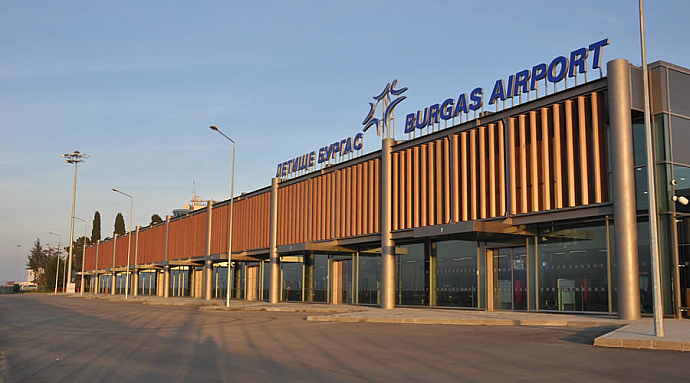
| Varna and Burgas | For year-round coastal living. Prices range from €1,500 to €2,000 per sq. m. | Strong year-round rental demand. |
| Sunny Beach | For seasonal holidays. Prices range from €700 to €1,500 per sq. m. | Moderate liquidity with strong seasonal variation. |
Step-by-step relocation plan from Iran to Bulgaria
A successful move depends on following the required legal and banking procedures. The main steps are:
| Step | Action |
| 1 | Choose the basis for your residence permit and arrange translations of the documents |
| 2 | Carry out a legal check of the selected property in the Bulgarian Property Register |
| 3 | Open a personal bank account, complete sanctions and source-of-funds checks, and pay the deposit |
| 4 | Obtain a long-term Type D visa from a Bulgarian consulate in a third country |
| 5 | Complete the purchase before a notary and apply for the physical residence card |
Frequently asked questions about taxes, residence and daily life in Bulgaria
Below are answers to common questions about apartment measurements, tax, driving licences, military records and health insurance.
The usable living area is usually 15–20% smaller than the figure in the title deed. The deed records the total built-up area, which includes a share of the building’s common areas, stairwells and external walls.
Iran and Bulgaria have a double-taxation agreement. The Bulgarian tax authority credits tax that was lawfully withheld in Iran. Bulgaria’s corporate and personal income-tax rates are 10%.
An Iranian driving licence is valid in Bulgaria for one year. It can then be exchanged for a Bulgarian licence without an examination. A resident must also complete customs clearance for a personal vehicle within six months.
No. Bulgarian immigration officers do not request military-service documents or contact Iranian military authorities. The standard background document is a legalised criminal-record certificate.
Medical insurance with €30,000 in cover applies only to emergencies. Planned appointments with specialists must be paid for privately. Access to state-funded healthcare begins five years after obtaining permanent residence.
Risks of buying property without legal support

Skipping legal checks can lead to substantial losses. Iranian buyers moving to Bulgaria may otherwise encounter properties that are mortgaged or subject to other encumbrances.
Buying a building without Act 16 may prevent a residence application, and electricity may be billed at a much higher commercial rate.
Sanctions make full financial transparency essential. Using unregulated intermediaries to transfer funds can lead European banks to close the recipient accounts.
Using a registered company allows a land purchase to be structured lawfully, with the ownership held through the company.


Next step
Check the property’s title before paying a deposit. Calculate the municipal taxes and request a register extract confirming that there are no legal encumbrances.