







.jpg)




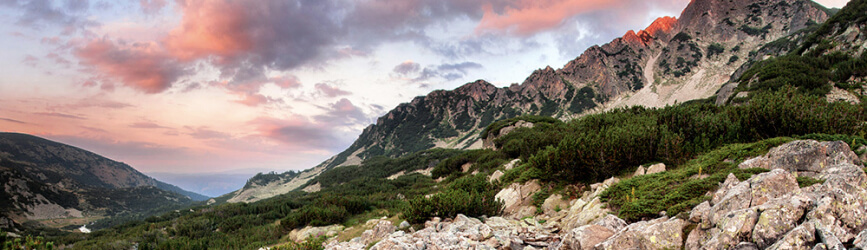
Pirin is one of Europe's oldest mountain ranges and a national park in south-western Bulgaria: more than 50 peaks above 2500 m, around 170 glacial lakes, rich wildlife and flora, and at its foot the resorts of Bansko and Sandanski.
In the mountainous south-west of Bulgaria lies the protected corner of Pirin. When the national park was created, the goal was set to preserve this region, unique in its beauty and diversity. Since its establishment in 1962, the protected area has grown sevenfold, and today hunting, fishing, logging and any other economic activity are forbidden here. Geographically, the park lies between the Struma and Mesta rivers, and its main part sits above a thousand metres above sea level.
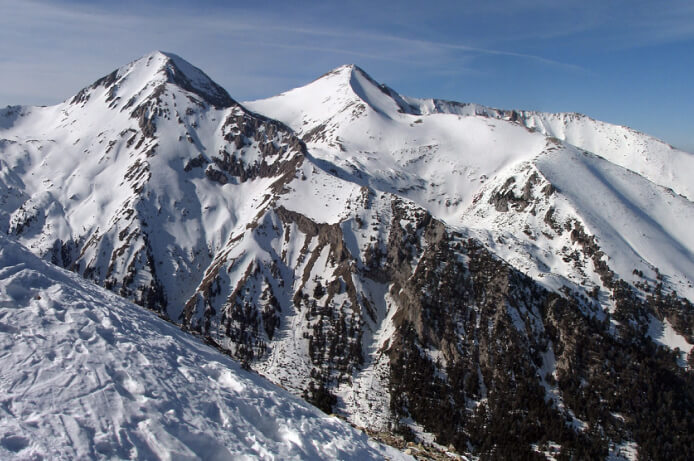
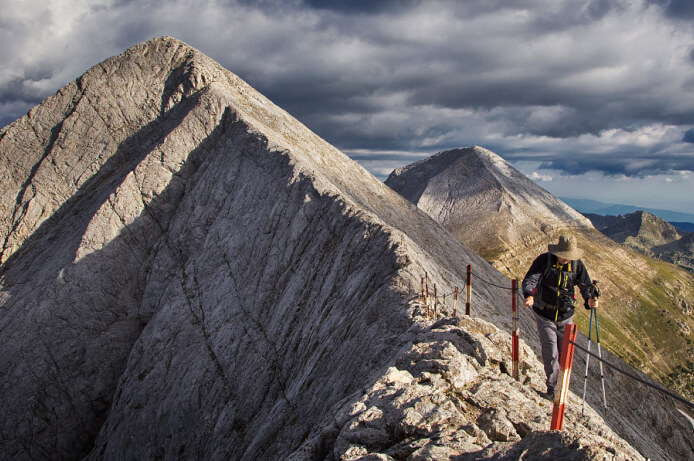
Pirin is one of the oldest mountain systems in Europe, whose final appearance took shape after the last glacial period. Within the park's boundaries there are more than 50 marble and granite peaks over 2500 m high. The main peak — Mount Vihren at 2914 metres — ranks third among the highest mountains of the Balkan Peninsula.
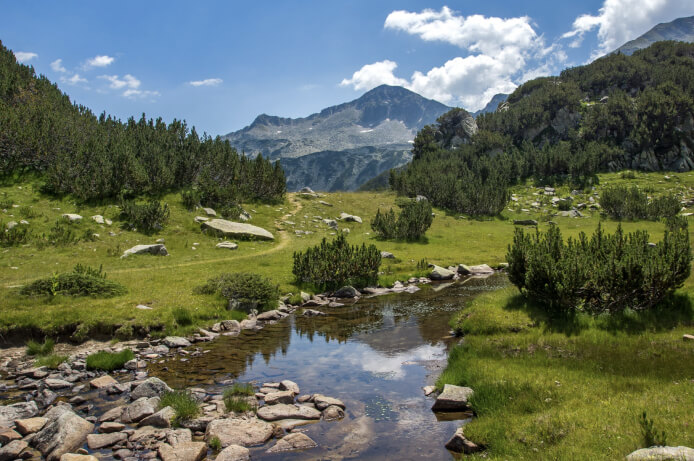
A large number of hiking trails run across the park, particularly popular with tourists from spring to autumn. In winter a ski resort with modern infrastructure is open. The area is rich in karst formations, so those who enjoy exploring caves will find unusual places here.
Origin of the name
The modern name of this mountain region came to us from the times when the Slavs were pagans. The chief deity was Perun, whose dwelling was on the highest mountain, Vihren. The summit itself is often hidden in clouds — a better place for a “deity” to live is hard to imagine.
The oldest name is Yudenitsa, but the etymology of this word has still not been studied. The Thracian tribes called these mountains more plainly — “Orbelus”, which translates into modern language as “snowy mountains”. During Ottoman rule the name Beride took hold, conveying in Turkish the idea of something solid that has stood for a long time.
Hiking trails for tourists
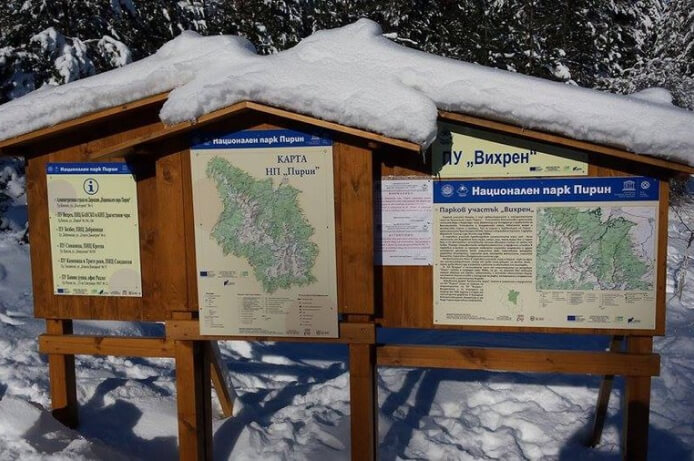
Specially for tourists, an information centre has been opened in the town of Bansko under the administration of the “Pirin” park. The aim of this project, within the environmental protection programme, is to inform visitors about safe routes and the features of the protected area.
The complex provides a visitors' room, a projection hall and a permanent exhibition with 20 information modules recreating the region's unique ecological system. The centre was built at the foot of the mountain, allowing anyone — even a tourist with little time — to learn curious and important things about the unique wild nature preserved in the “Pirin” National Park.
| Information | Details |
|---|---|
| Postal address of the information centre | 2770 Bansko, Pirin Street, building 104 |
| Opening hours — winter (November – April) | daily from 9:00 to 17:00 |
| Opening hours — summer (May – October) | daily from 9:00 to 17:30, lunch break 12:30 – 13:00 |
| Group visits | prior request required |
Wildlife
More than two thousand wild animals are protected in the national park, living in their natural environment. Here you can often meet rare inhabitants listed in the Red Book, for example the surviving population of chamois. According to some data, there are currently 250 of them.
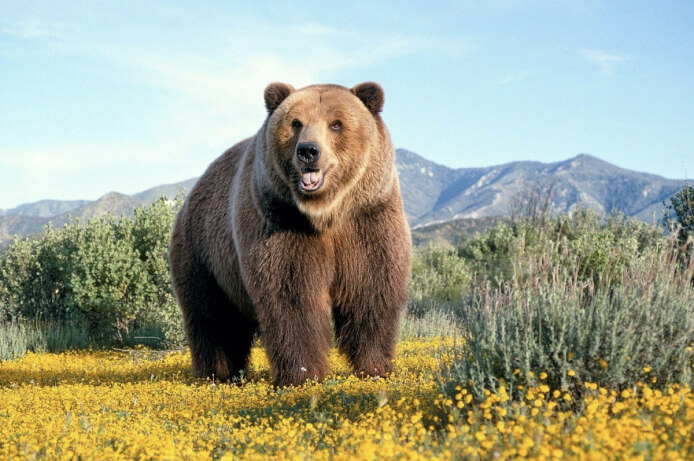
The largest representatives are the brown bear, deer, mountain goat, roe deer and wolf. There are many hares, foxes and other smaller inhabitants, including numerous rodents. Zoologists identify 45 species of mammals, of which twelve varieties of bats live in the caves. Six species of fish are found in the mountain streams, rivers and lakes.
More than 160 species of birds have found a home on the mountain slopes in dense forests. Several species of owls, falcons and lesser spotted eagles are widespread throughout the reserve, as well as Balkan larks, peregrine falcons, rock nuthatches and crested tits. Among the birds of prey, the golden eagle particularly stands out. Today the Pirin mountains are one of the few places where it has preserved its range.
Flora
The national park is rich in plant life, which gradually changes by climatic zone as you climb. In the valley of the Struma river grow olive trees and the heat-loving quince, and around the floodplains you can find lilies and orchids. Some species are endemic and grow only in this area; they include primroses and the Red Book–listed Pirin poppy and edelweiss.
At the foot of the mountains, deciduous trees mostly grow, among which beech, oak and hornbeam predominate. In higher areas the forest gradually changes to conifers, mainly pines, and higher still to junipers, giving way to alpine meadows.
A highlight that tourists try to visit is the “Baikusheva mura” — a pine 1300 years old. It was discovered at 1930 metres above sea level in the 19th century by the forester Konstantin Baikushev. The tree impresses with its size: 26 metres tall, a crown 7.8 metres in diameter and a trunk 2.2 metres in circumference. A route can be laid from Bansko to the “Banderitsa” hut, then 300 metres up the path. In terms of age, this Bosnian pine (Pinus heldreichii) is second in Bulgaria only to the oak in the village of Granit, which is 1650 years old.
The lakes of Pirin
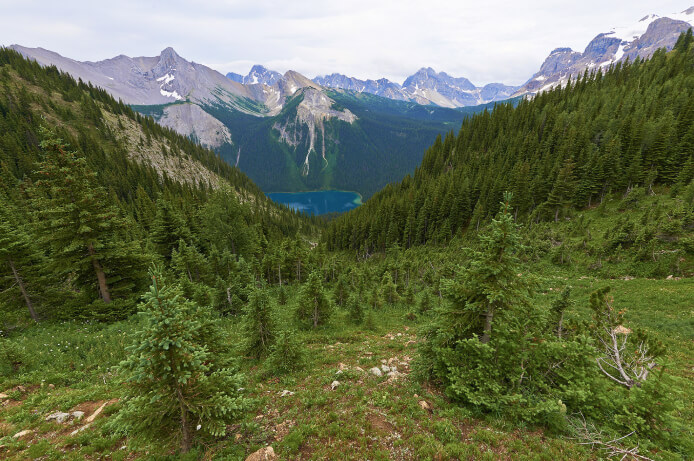
The very structure of the mountains allows the streams running down into the saddles to form “glacial” lakes (up to 170 of them are counted). Large and very tiny, filled with the purest water, they form a unique ecosystem inherent only to this area. Widely known among tourists are the Banderitsa, Valyavitsa and Vasilaki lakes, and the Popova valley, beloved by holidaymakers, 6 km long and 3 km wide with a large body of water in the centre.
The Banderitsa river originates from a group of lakes of glacial origin; the water is perfectly clear, and its source and upper course run among granite rocks. On the slope of Mount Todorka, at 2322 metres, lies the first of the group, the Frog Lake. In theory only amphibians can live in it, as the depth does not exceed two metres. The next step is twelve metres lower, where the Long Lake lies, sometimes called the Upper one. On the next terrace, twenty metres lower, is a place for angling enthusiasts — the “Big” or Fish Lake. The name took hold because of the abundance of fish living in the reservoir.
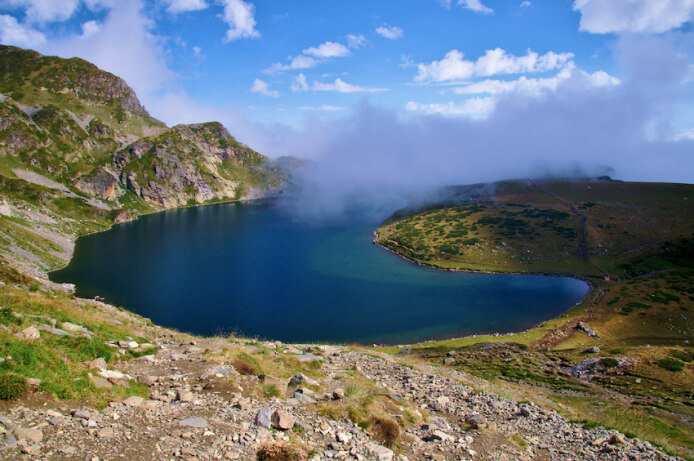
Not far from the Banderitsa river lies the picturesque Muratovo, or Coniferous, Lake. A narrow stream flows into it, descending along a chute between the Muratov and Groyat peaks and forming a picturesque bay as well as two elongated peninsulas. The reservoir can be reached in no less than an hour and a half on foot from the Vihren hotel, heading south.
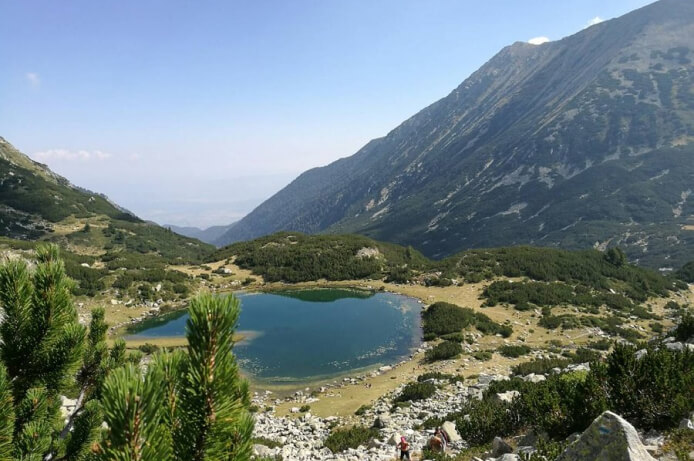
Different sizes, rocky shores, whimsical shapes and beautiful landscapes — you can put together your own individual walking route around the lakes.
Balneological resort
On the bank of the Bistritsa river, on the western slopes of the Pirin mountains, close to the Greek border, lies the balneological resort of Sandanski. Twenty hyperthermal springs with high mineralisation and different temperatures from 42 to 81 degrees are used for treatment and health recovery.
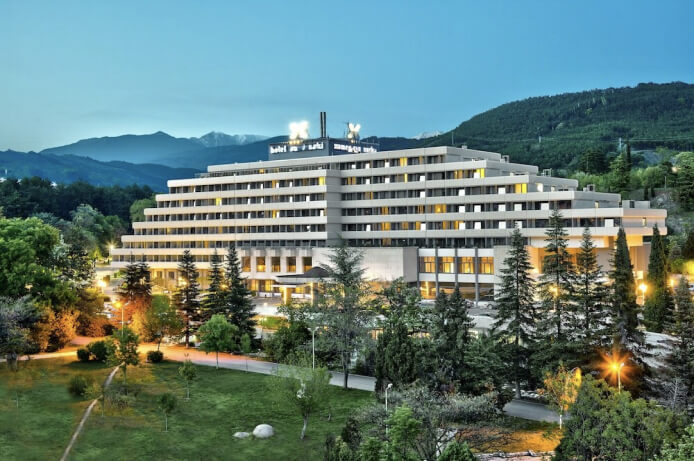
Earlier the settlement was called Sveti Vrach, but since 1949 the town has borne its name in honour of the Bulgarian revolutionary Yane Sandanski, buried near the town of Melnik in the Rozhen Monastery. The resort is at 225 metres above sea level and is unique for its climate: the winter here is mild, and the autumn warm and long. The settlement itself is protected by the surrounding mountains, so there is no strong wind. Even in winter, on a fine day, you can often meet people who like to sunbathe.
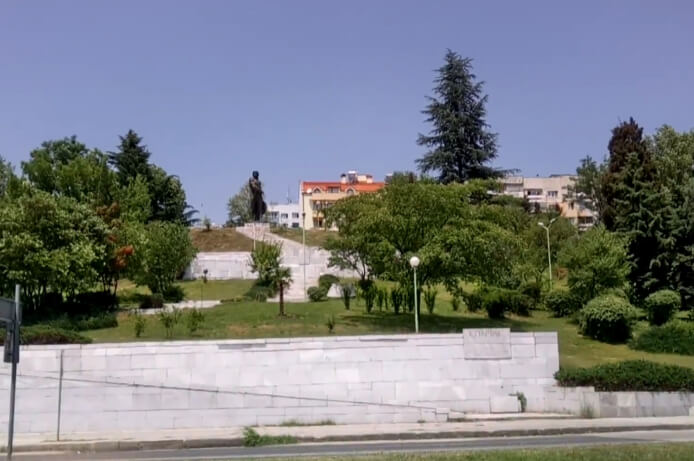
The resort is also suitable for active recreation, which can be combined with treatments in the sanatorium. Mountain walks and bicycle trips are organised, and you can ride catamarans in the park. Visit the monuments to Spartacus, Todorov and Yavorov, as well as the bishop's church, the tomb-mausoleum of a Roman nobleman, the early Christian complex and the waterfall over the Bistritsa river.
Ski resort
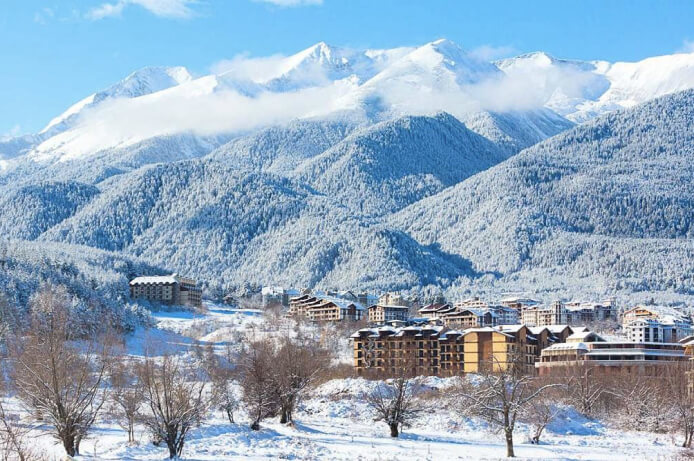
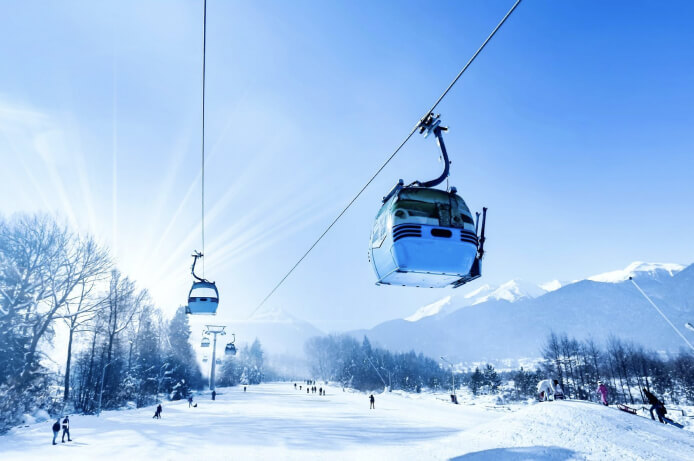
Bansko is a modern centre of winter entertainment located on the slopes of the Pirin mountains at 936 metres above sea level. Slopes for beginners and professionals are equipped for sports enthusiasts. Lifts operate along the ski runs. In 2020 the Women's World Cup in downhill and super-G was held here.
The town has well-developed tourist infrastructure — a large number of hotels, aparthotels, mehanas, restaurants and fast-food outlets. The resort is easy to reach by car and rail.
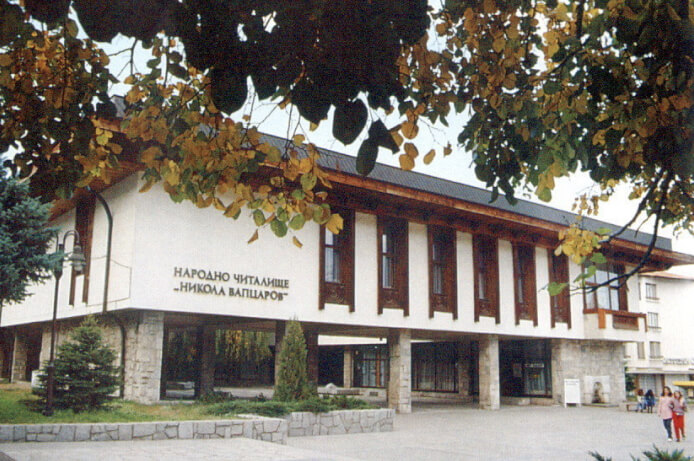
There is a house-museum of Nikola Vaptsarov, as well as a history museum where you can learn about the homeland of the folk educator Paisius of Hilendar and the actress Magda Kolchakova. In summer guests are invited to a jazz festival, and in late autumn a biennale dedicated to mountain cinema is held.
Summary
The Pirin National Park attracts tourists with views of wild nature, interesting hiking trails, and untouched flora and fauna. Active recreation can be combined with sanatorium treatment or downhill skiing. Besides walking, mountain biking and horse riding, fishing and caving are available. There are a large number of monuments, museums and historical sites preserved from ancient times.

