









.jpg)

Are you an Austrian citizen looking for a profitable "second home" in the European Union? While property prices in Austria remain high, Bulgaria offers not only a mild climate and low cost of living but also unique legal and tax advantages specifically for you. Did you know that unlike citizens of other countries, Austrians can freely buy houses with land? And that thanks to the current Double Taxation Agreement (DTA), you can legally optimize taxes to 10%, and when selling property, often pay 0%?
This guide isn't just an overview. It's a detailed legal and tax analysis based on Austro-Bulgarian legislation. It will show you all the pros and "hidden pitfalls" that realtors usually don't mention, so you can make an informed and safe decision. Read on to find out how to invest safely and why Bulgaria is your hidden ace in the EU.
| Section of this guide | Key benefit for you (as an Austrian citizen) |
|---|---|
| Find out why you have more rights than other foreigners (including buying land). | |
| Understand how the Austria-Bulgaria DTA protects you from double taxation. | |
| Get a step-by-step plan for a secure transaction, focusing on the lawyer's role. | |
| We'll honestly tell you about the "maintenance fee" and unscrupulous agents. | |
| Find out how to get a mortgage from a Bulgarian bank with an EU passport. | |
| Understand how simple it is to legalize your stay (no visas required). |
Key Pros: Why Bulgaria is the Ideal Choice for Austrians
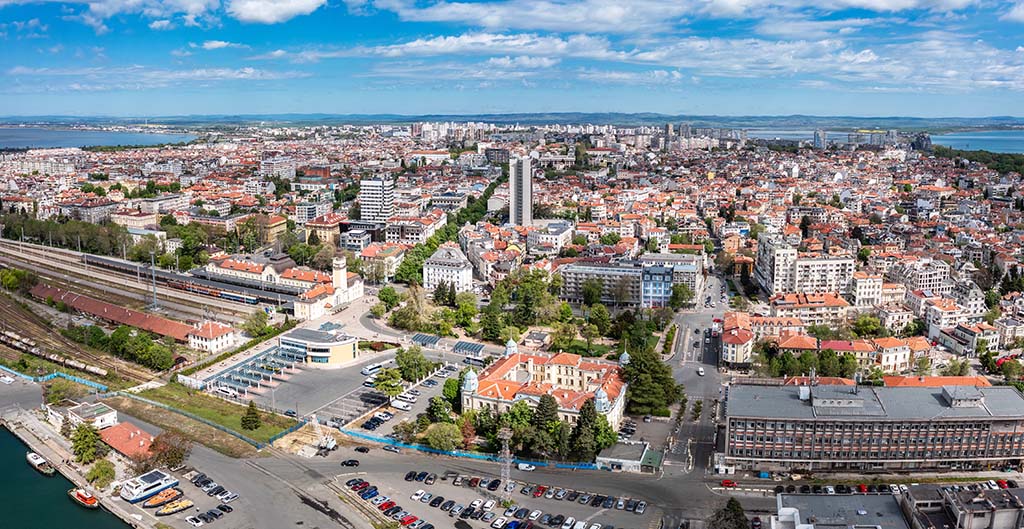
Austrian citizens, like other EU citizens, see Bulgaria not only as a holiday destination but also as a serious investment location. The reasons lie in the unique combination of legal simplicity, low entry barriers, and a favorable tax climate.
The key advantage is your EU passport. It removes 99% of the legal barriers that exist for buyers from third countries, making the process almost as simple as buying in Austria.
Legal Clarity: Full Rights for EU Citizens

The main advantage for an Austrian buyer is full ownership rights. Bulgarian legislation, harmonized with EU norms, fully equates Austrian citizens with Bulgarian citizens in terms of rights.
The most important aspect is the right to own land. Before joining the EU, Bulgaria restricted the sale of land to foreigners. To buy a house with a plot, it was necessary to register a Bulgarian company, which entailed maintenance costs and legal complexities.
For citizens of Austria (and the entire EU), this restriction has been completely lifted. You can buy a house with a plot, a building plot, or agricultural land (with some conditions) directly as an individual. This dramatically simplifies the transaction, reduces costs, and makes the investment more transparent.
Tax Incentives: 10% Flat Tax and DTA

Bulgaria offers one of the most attractive tax regimes in Europe:
- 10% Flat Tax: The country has a single income tax rate of 10%. This applies to both rental income and any other income earned in Bulgaria.
- DTA (Double Taxation Agreement): The most important thing for an Austrian resident is the existence of a Double Taxation Agreement (DTA) between Austria and Bulgaria.
For a pragmatic Austrian, this means financial security. You will not pay taxes twice. Income earned and taxed in Bulgaria (e.g., 10% on rent) will be recognized by the Austrian tax authorities but will not be taxed again at the high Austrian progressive rate.
Financial Accessibility: Prices and Mortgages

Despite the price growth in recent years, Bulgaria offers excellent value for money.
Moreover, local financing is available to Austrians. Major Bulgarian banks, often part of European financial groups (e.g., UniCredit Bulbank, DSK Bank, Postbank), offer mortgage programs for EU citizens, even if they are not Bulgarian residents. Banks are usually willing to finance up to 80% of the property's appraised value.
Tax Guide: How an Austrian Should Pay Taxes on Bulgarian Property
DISCLAIMER
This information is for informational purposes only and does not constitute tax advice. Every investor's situation is unique. We strongly recommend seeking a personal consultation from a certified tax advisor specializing in Austrian and Bulgarian law.
Understanding the tax system is key to a profitable investment. Ignorance of DTA nuances can lead to overpayments or penalties in one of the countries.
Austria-Bulgaria DTA: How It Works
The Double Taxation Agreement (DTA) is your main legal shield. Its primary function is to determine which of the two states (Austria or Bulgaria) has the right to tax a particular type of income.
For income from real estate (rent), the right to tax generally belongs to the country where the property is located. That is, you will pay taxes in Bulgaria on rent from an apartment in Burgas. In Austria, this income will be considered to determine your overall tax rate, but the income itself will not be taxed again.
To apply for DTA benefits, you must follow a specific administrative procedure, confirming your tax residency.
One-Time Taxes on Purchase
When closing the deal, the buyer (Austrian) incurs the following one-time expenses:
- Property Transfer Tax: This is a local tax, with the rate set by each municipality. It ranges from 2% to 3.5% of the transaction amount (specified in the notarial act) or the cadastral value, if higher.
- Notary and Registration Fees: Fees for the notary's services and registration of the transaction in the Property Register. These also amount to a certain percentage of the value.
Annual Property Taxes
Owning property in Bulgaria is subject to two main annual taxes:
- Property Tax: A low local tax calculated based on the property's tax assessment.
- Waste Collection Fee: Also a local fee.
As of 2024, Bulgarian municipalities have been given more flexibility in setting these rates.
Rental Income Tax
As mentioned, all income from renting out property is taxed in Bulgaria at a flat rate of 10%. This is one of the lowest rates in Europe.
Capital Gains Tax
This is one of the most powerful financial incentives for Austrian investors. In Austria, the capital gains tax on property sales can be quite substantial.
In Bulgaria, under local law, you are completely exempt (0% tax) from capital gains tax when selling property if:
- You sell one primary residential property per year, provided you have owned it for more than 3 years.
- You sell up to two other properties (non-primary residence, e.g., holiday apartments), provided you have owned them for more than 5 years.
If you sell the property before this period, the profit (the difference between the purchase and sale price) will be taxed at the same 10% rate. These matters are also regulated by Article 13 of the DTA between Austria and Bulgaria.
Compare the Taxes: Your Advantage in Bulgaria
| Tax Aspect |
In Bulgaria (for an Austrian resident) |
Potential Benefit |
| Rental Income Tax | 10% flat rate | Austria uses a progressive scale (up to 55%); the savings here are clear |
| Capital Gains Tax | % after 3 or 5 years of ownership | A huge advantage (in Austria, it's 30%) |
| Agreement (DTA) | Yes. Protects against double payment | Legal security and predictable expenses |
Step-by-Step Buying Process: A Legally Secure Transaction

The buying process in Bulgaria is simple and transparent but requires strict adherence to legal procedures.
In Bulgaria, the role of an independent lawyer is often more important than in Austria. You should not blindly trust a real estate agent who is motivated by a commission. Your lawyer is motivated by your security.
What documents does an Austrian need?
An Austrian citizen needs minimal documents for the transaction:
- A valid passport.
- An open bank account in a Bulgarian bank (necessary for payment).
- If the transaction is done remotely – a notarized power of attorney for your lawyer.
Pitfalls: What Agents Don't Talk About

An honest discussion about risks helps to avoid them.
Caution: The biggest risk in Bulgaria is not the law, but the human factor. Underestimating hidden costs and choosing a "cheap" but dishonest intermediary are the main mistakes.
Risk 1: «Maintenance Fee»
This is perhaps the main financial surprise for foreign buyers, especially in resort complexes (e.g., in Sunny Beach, Varna, Burgas).
The «maintenance Fee» is not a state tax. It is an annual fee you pay to a private management company for the maintenance of the complex's common areas: pool, security, landscaping, elevators.
The problem is that its amount is not always obvious at the time of purchase and can be high:
- Average size: From 8 to 15 euros per sq.m. per year. In prestigious resort areas – 10-15 €/sq.m.
- Calculation method: Most often per square meter (including common parts). Less often – a fixed amount per apartment (e.g., 350-550 euros per year).
This amount can be significant and must be factored into the rental profitability calculation. All details about the maintenance fee in Bulgaria should be specified in your contract with the management company.
Calculate the Real Cost of Ownership
| Region / Property Type | Average rate (EUR/sq.m. per year) | Annual fee (for 60 sq.m.) |
|---|---|---|
|
Resorts (Sunny Beach, Varna)
|
10 € – 15 €
|
600 € – 900 €
|
|
City Apartment (Sofia)
|
7 € – 12 €
|
420 € – 720 €
|
|
Small Towns
|
5 € – 8 €
|
300 € – 480 €
|
Risk 2: Unscrupulous Agents and Quality
Real expat experience (as seen in forum discussions) shows that the choice of agent is a key risk.
- Expat Experience: Some buyers find that "many agents are arrogant, impatient, dishonest, and lazy."
- Deception Tactic: Attempts to sell undesirable properties that locals refuse. A classic example – apartments on the ground floor or under the roof. Locals avoid them due to the risk of dampness (on the ground floor) or extreme heat and poor insulation (on the top floor).
- Construction Quality: Some new buildings may have problems with insulation and heating.
Solution: Do not rely solely on the agent. Involve your lawyer to check the documents and, if it's a new build, an independent construction expert for technical acceptance.
Life After Purchase: Registration and Stay in Bulgaria

For an Austrian citizen, legalizing a stay in Bulgaria is a simple formality.
Your EU passport allows you to live, work, and do business in Bulgaria without any additional permits, which is a huge advantage.
Visa-Free Entry: EU Freedom of Movement
As an EU citizen, you enjoy the right to free movement. You do not need a visa to enter, stay, or buy property in Bulgaria.
Staying Longer Than 3 Months: Registration Procedure
If you plan to stay in Bulgaria for more than 90 days, you need to complete a simple registration.
This is not a residence permit, as it is for third-country nationals, but a notification procedure. You simply register at the local branch of the migration service (MVR) and receive a Residence Certificate.
This usually requires:
- An Austrian citizen's passport.
- Proof of address in Bulgaria (e.g., the notarial act for your property).
- Proof of sufficient funds or employment (for a long-term stay).
Understanding which region to buy a house in is also important for planning your move and registration.
Frequently Asked Questions

Yes, absolutely. It is critically important for verifying the deal's "cleanliness" (due diligence), protecting against unscrupulous agents, and analyzing contracts.
Yes. Bulgarian banks, especially those in EU groups (UniCredit, DSK), actively lend to EU citizens, even if they are not Bulgarian residents.
You pay the tax (10%) in Bulgaria. In Austria, this income is declared but not taxed again; it is only considered for determining your overall tax rate (thanks to the DTA). There is no double taxation.
It varies greatly. On average, from 5 to 15 euros per sq.m. per year. In resort complexes with pools and security, it's more expensive; in city buildings, it's cheaper.
Yes. As an EU citizen, you have the full right to do so, unlike third-country nationals. You buy the land in your own name, without needing to register a company.
Your Next Step to a Home in Bulgaria

Buying property in Bulgaria is one of the smartest and most profitable decisions for an Austrian citizen within the European Union. You get full rights to purchase land, extremely low and transparent taxes (10% on rent, 0% on capital gains), and full legal protection from double taxation thanks to the DTA.
The main thing is to approach the process with Austrian pragmatism: don't chase the lowest price, but ensure maximum security. Avoid "pitfalls" like non-transparent maintenance fees and dishonest agents.
Don't let the risks overshadow the huge benefits. Contact our team for a full legal and tax consultation before you sign a preliminary agreement. We will ensure the security of your transaction and help you understand how to buy property profitably in 2025.

