







.jpg)



Updated on 12 August 2026. This article helps readers find Russian-speaking support while also building direct links with Bulgarian institutions and local residents. Before contacting an organisation, confirm its current details, programme, legal identity where relevant, and intended participants.
A Russian-speaking community consists of people who are comfortable communicating in Russian. It does not determine their citizenship, origin, views or legal status. It may include citizens of Ukraine, Bulgaria, Russia, Moldova, EU countries and many other states.
It is more useful to focus on where to find the help you need, how to verify it and how to take part in the life of your municipality than to generalise about the diaspora as a whole.
Language is not a legal category. Advice given to one Russian-speaking person may be wrong for another if their citizenship, residence document, work situation or protection status differs. Use community experience for orientation and the competent authority for a legal or administrative decision.
Begin with two networks after moving
The first network helps in a familiar language: practical orientation, translation, neighbourhood knowledge, children's activities and professional contacts. The second connects the newcomer with official and local resources: the municipality, school, doctor, employer, library, community cultural centre and the authority responsible for the person's status.
- Record the municipality and district responsible for the address.
- Identify the authority responsible for the current residence or protection document.
- Find a Bulgarian-language course or regular conversation practice.
- Choose one professional activity and one local community activity.
- Verify important rules at an official source even when the first explanation came from a trusted chat.
Russian-speaking does not mean Russian citizen
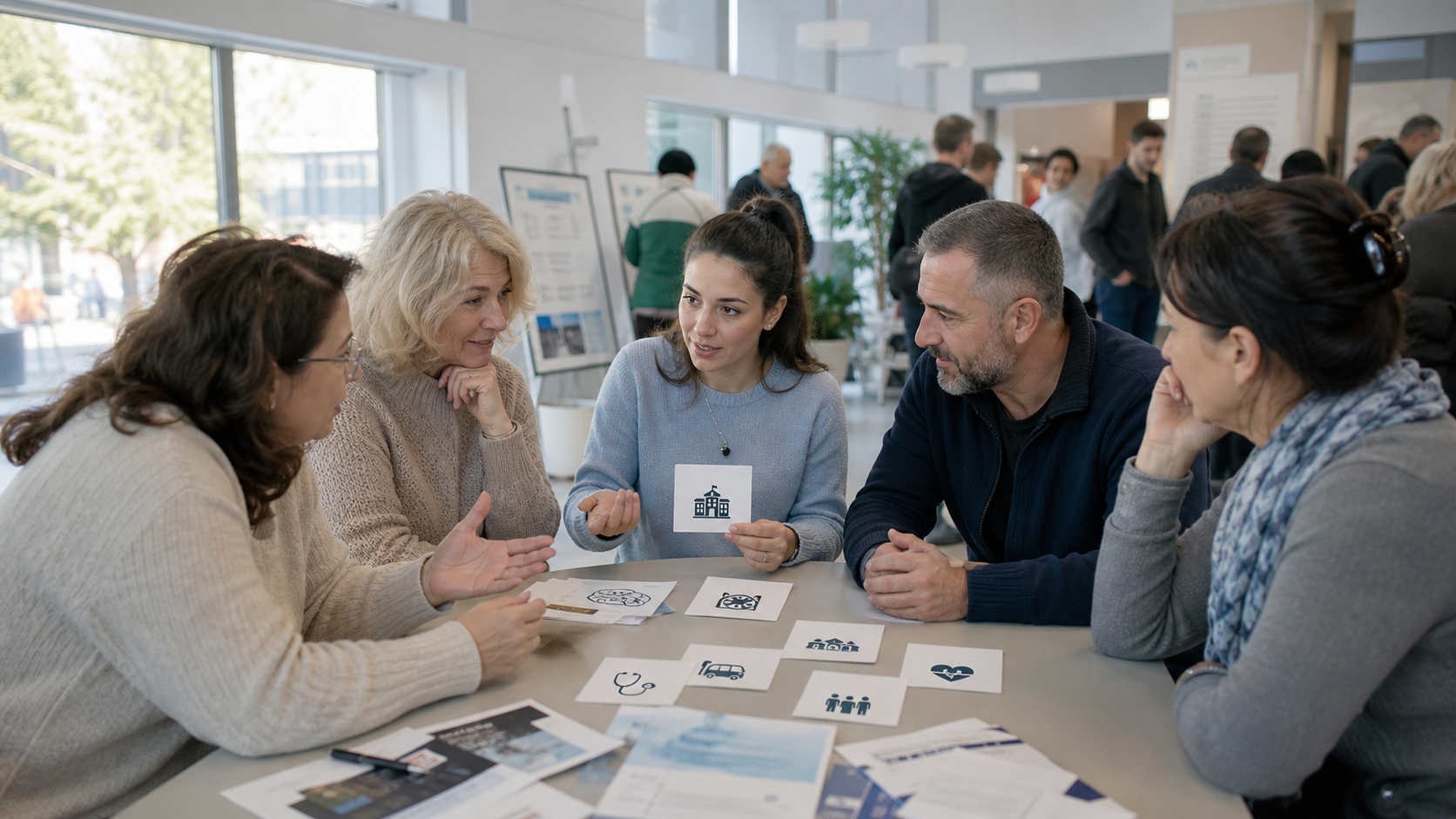
Communication language cannot stand in for citizenship or a legal basis for residence. Two people who both speak Russian may have different registration duties, work rights, access routes to services and family procedures. Advice for an EU citizen does not automatically fit a third-country national, and advice for an ordinary residence permit does not automatically fit a Ukrainian under temporary protection.
It is equally misleading to assign Russian-speaking people one political position, character or attitude towards Bulgaria. For a school, job, doctor, cultural group or association, assess the actual terms, conduct and competence of the specific organisation.
The legal route follows status, not language
| Category | What to check separately | Official starting point |
|---|---|---|
| EU, EEA or Swiss citizen | Residence registration, address formalities and the rules of the service being used | Migration Directorate, municipality and the authority responsible for the particular service |
| Third-country national | Residence basis and validity, work route, family situation and education route | Migration Directorate, Ministry of Foreign Affairs or competent mission, and the specialist authority involved |
| Ukrainian under temporary protection | Current protection document and official routes for employment, education, healthcare and support | Bulgaria for Ukraine and the state or municipal service linked from the official route |
Temporary protection is a separate legal regime. Do not relabel it as Visa D or assume that an ordinary residence-permit checklist applies. If a person is considering another route, ask the competent authority how it interacts with the current protection document.
Define the help you actually need
The word ‘community’ covers different purposes. Some groups organise cultural events; others connect parents, professionals, entrepreneurs or newcomers. State the desired outcome before joining a chat, paying a fee or sharing personal documents.
| Task | First route | What to verify |
|---|---|---|
| Documents and status | Competent authority first, then a translator or qualified professional if needed | Competence, date of the information and written legal or procedural basis |
| School and kindergarten | Municipality and the chosen institution | Catchment area, admission route, language support and required documents |
| Work and profession | Employment Agency, EURES, employer and professional network | Right to work, recognition of qualifications, language and written contract terms |
| Language and daily integration | Municipal programmes, libraries, community cultural centres and language schools | Level, timetable, fee, organiser and participant group |
| Social and cultural life | Municipal calendar and active civic associations | Recent events, organisers, participation rules and safeguarding where relevant |
Check whether a resource is active
An old address or familiar name does not prove that an organisation is operating today. Verification is not an accusation. It simply distinguishes an archival reference from a working contact and establishes what the group can actually do.
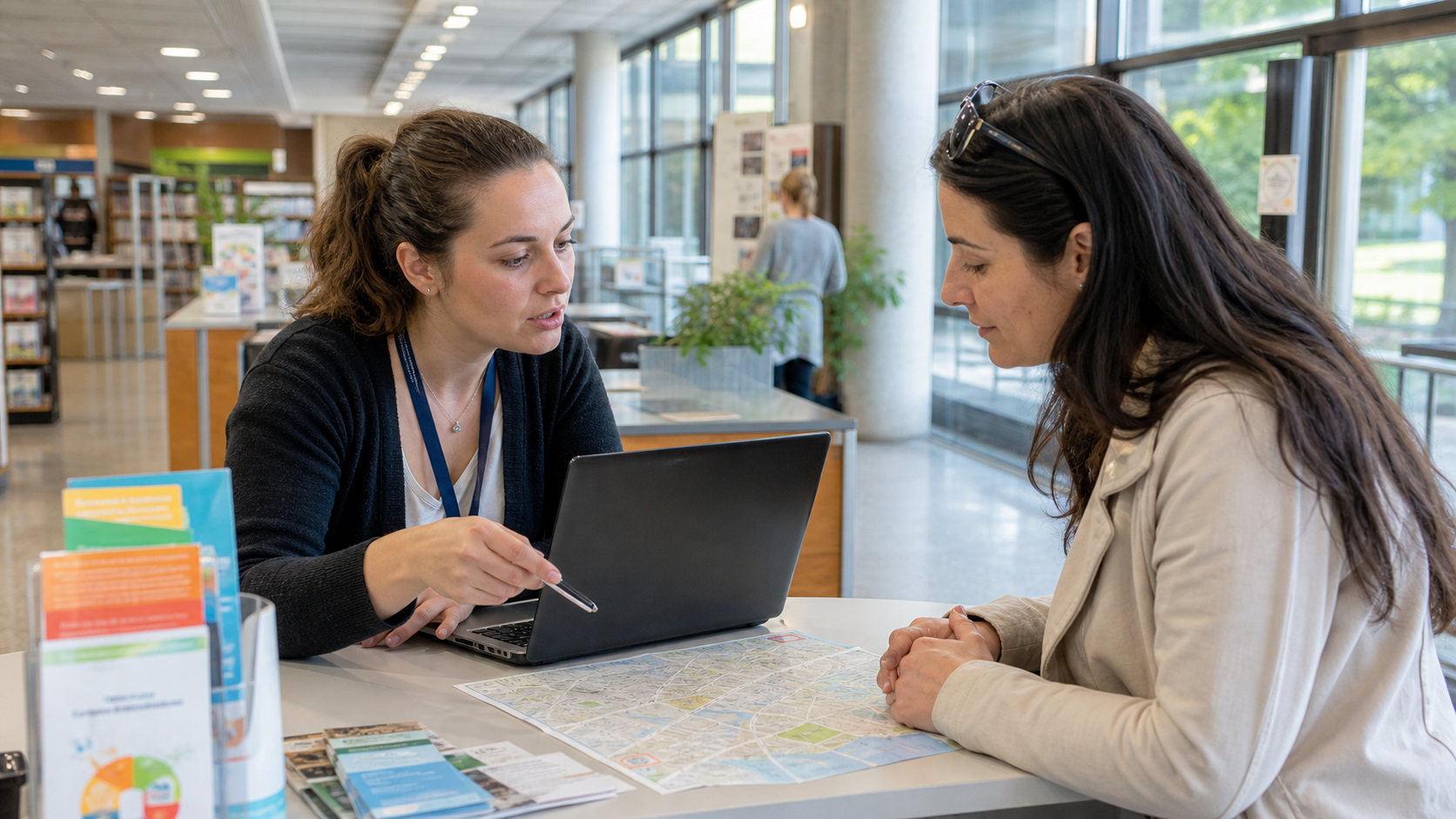
- Find a recent dated publication, meeting or event.
- Match the public name to the legal entity and official contact channel where relevant.
- Confirm who answers the enquiry and which services are currently provided.
- Before paying, check the price, personal-data terms, cancellation and refund rules.
- For legal, medical, migration or education decisions, obtain confirmation from the competent authority.
A community group can provide valuable experience and mutual support. Its message does not replace a decision by a municipality, migration office, school, doctor or other responsible institution.
Archived demographic background
The 2015 version of this page cited Bulgaria's 2011 census and reproduced a distribution of foreign migrants that excluded people with dual citizenship. This is an old measure from an old reference period. It cannot establish the present size of a Russian-speaking population because language, citizenship and migration category are different variables.
| Archived item | Value cited by the page | Limit |
|---|---|---|
| Foreign migrants in the 2011 census | About 35,600 people, excluding dual citizens | Not a current estimate and not a count of Russian speakers |
| Russian citizens | 33.7% of the cited group | Citizenship does not determine language or community participation |
| Ukrainian citizens | 8.6% of the cited group | The figure predates later migration changes |
| Armenian citizens | 3.3% of the cited group | Citizenships cannot be merged into one language group without a method |
| British and Greek citizens | 7.3% and 3.5% respectively | The comparison applies only to the archived group described by the page |
For a new demographic claim, use current tables from Bulgaria's National Statistical Institute. Record the year, indicator definition, population covered and whether the table measures citizenship, country of birth, language or another characteristic.
What the 2012 survey can and cannot show
The dated article summarised a survey attributed to the Institute for the Study of Societies and Knowledge. It said that more than 1,000 respondents from different regions answered questions about attitudes towards a ‘Russian diaspora’ and its influence. The page reported positive responses of 42.7% and 41%, and negative responses of 2.8% and 3.9%, for two questions.
Those figures are retained only as the page's account of a specific 2012 survey. The page did not preserve a link to the full report, the exact question wording, full sampling design, response scale or processing method. The figures therefore do not describe every Bulgarian resident's current attitude and cannot predict one newcomer's experience.
For a practical decision, investigate the particular municipality, neighbourhood and institution: service availability, working language, rules, recent events and opportunities for direct participation.
Archive of eight organisations: research leads, not a current directory
- Balkan Association of Russian Compatriots, Балканская ассоциация российских соотечественников.
- Coordinating Council of Organisations of Citizens of Russian Origin in Bulgaria, Координационный совет организаций граждан русского происхождения в Болгарии.
- Russian Club Society, Общество «Русский клуб».
- Society of White Émigrés and Their Descendants in Bulgaria, Общество белоэмигрантов и их потомков в Болгарии.
- Russian Academic Union in Bulgaria, Русский академический союз в Болгарии.
- Union of Descendants of the Russian Nobility in Bulgaria, Союз потомков русского дворянства в Болгарии.
- Federation ‘Union of Compatriots’, Федерация «Союз соотечественников».
- Forum of Russian Compatriots, Форум российских соотечественников.
If one name appears relevant, look for a current official page, recent events and registration details. The absence of a recent post does not prove that the organisation has closed, but it means the contact needs further confirmation before relying on it or making a payment.
Integration does not require abandoning a familiar language
For everyday connections, consider neighbourhood events, libraries, community cultural centres, sports groups, parent initiatives, volunteering and professional meetings. Choose an activity by interest and purpose, not only by the language spoken by participants.
A four-week orientation plan
- Week 1. Confirm status-related and address formalities and save the municipality's official contacts.
- Week 2. Choose a Bulgarian course or regular conversation practice.
- Week 3. Attend one local event and one meeting of a relevant language or professional community.
- Week 4. Review which contacts solve real tasks and add official, local and professional resources to the network.
In this way, a Russian-speaking environment supports orientation without becoming the only source of information, services or social contact.
Official and local verification routes
- National Statistical Institute of Bulgaria: current demographic tables with definitions and reference periods.
- Bulgarian Ministry of Interior, Migration Directorate: official residence routes for the relevant applicant categories.
- Bulgaria for Ukraine: official guidance for Ukrainians under temporary protection.
- Sofia Municipality, or the official site of the relevant municipality: services, education, cultural calendars and local programmes.
- Bulgarian Registry Agency portal: a route for checking registration information where an association is entered in the relevant register.
For the broader status map, see the guide to residence, long-term and permanent residence and citizenship. Readers choosing a location can also use the guide to cities and areas in Bulgaria. The original page's historical navigation also linked to the advantages and disadvantages of property in Bulgaria.
Official links and community contacts are starting points, not an assessment of one person's eligibility, rights or outcome. Confirm the current page, responsible office and access date before acting.
Information refreshed: 11 August 2026.

